
Thyroid Radiofrequency Ablation Near Costa Mesa
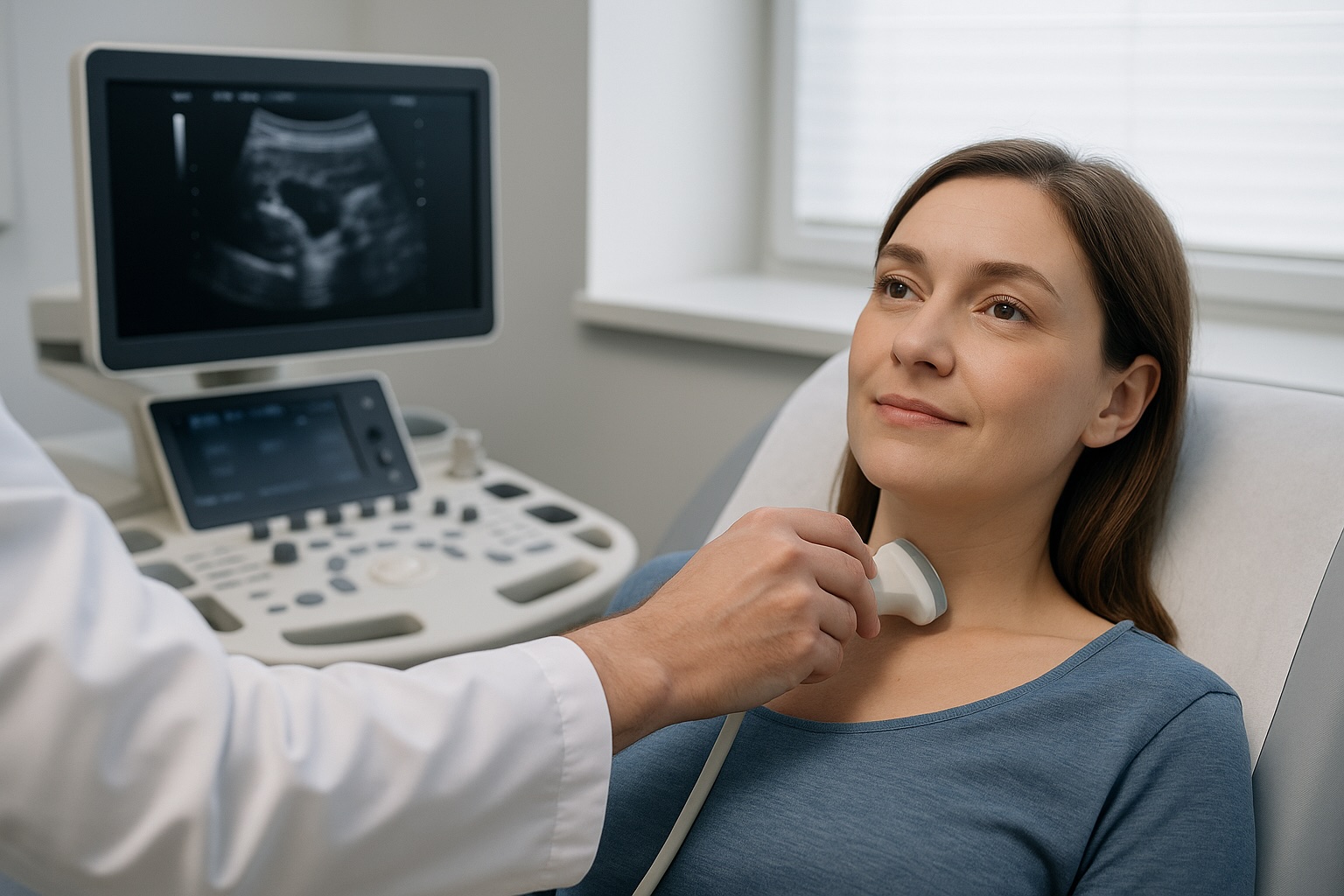

What Thyroid RFA Is and Why Patients Near Costa Mesa Ask About It
Thyroid radiofrequency ablation, often called thyroid RFA, uses heat delivered through a thin probe to treat targeted thyroid nodule tissue. The procedure is guided by ultrasound, so the treatment stays focused on the nodule while preserving the rest of your thyroid gland. Think of it as shrinking the problem from the inside rather than cutting the whole thyroid out.
That difference matters. If your nodule is benign but still causing symptoms, you may want relief without a neck incision, hospital stay, or full thyroid surgery. Patients in Costa Mesa, Turtle Rock, Newport Beach, and nearby Orange County communities often start looking into RFA when a nodule causes fullness in the neck, pressure when lying down, throat awareness, swallowing discomfort, or a bulge that is simply hard to ignore.
Thyroid nodules are also common. Some can be felt on exam, while many more show up on ultrasound by accident. Most are not dangerous, but “benign” does not always mean “easy to live with.”
How Thyroid RFA Works
During RFA, a thin treatment probe is placed into the thyroid nodule using ultrasound guidance. Heat is then applied to small areas of the nodule tissue. After treatment, your body gradually breaks down and absorbs that treated tissue over time.
So no, the nodule does not vanish the second the procedure ends. Shrinkage happens gradually over weeks and months, which is actually what you want. A slower, steady reduction often means less pressure, less visible fullness, and less disruption to normal thyroid tissue.
Why RFA Has Become More Popular
RFA has become more popular because it offers a middle ground between “do nothing” and “have surgery.” For many benign nodules, that is exactly what patients have been looking for. You avoid general anesthesia, you usually avoid a surgical scar, and you keep your thyroid in place.
Access still is not universal, though. In the United States, FDA clearance in 2018 helped expand awareness of RFA for benign thyroid nodules, but it remains more specialized than standard thyroid surgery. That is one reason patients often travel a short distance for a more focused evaluation, including from Costa Mesa to Lake Forest. If you want a nearby comparison, this guide to care options in Newport Beach can help you see how local access varies.
Who May Be a Good Candidate for Thyroid RFA
Good candidacy depends on a few specific things: what kind of nodule you have, whether it has been biopsied, what your ultrasound shows, and what symptoms it is causing. The best candidates usually have biopsy-confirmed benign thyroid nodules that are bothersome enough to treat, but not suspicious enough to require surgery.
That last point matters. RFA is not simply about finding a lump and shrinking it. It is about making sure the lump is the right kind of lump first.
Nodules That Often Respond Best
RFA tends to work best for solid or mostly solid benign nodules. These are often the nodules that create a feeling of pressure, a visible bulge, a constant sense that something is sitting in your throat, or swallowing symptoms that become more noticeable over time.
Many patients choose RFA because the nodule is not dangerous, but it is still affecting daily life. Maybe your shirt collar feels tighter. Maybe photos make the fullness more obvious. Maybe you are tired of being told to “just watch it” when it already feels disruptive.
When RFA May Not Be the Right Choice
RFA is generally not the right treatment for suspected or confirmed thyroid cancer. It may also be a poor fit for nodules that are mostly cystic, since other treatments such as ethanol ablation may be more effective in that setting. Some benign nodules also still need surgery because of size, location, anatomy, regrowth risk, or test results that do not tell a clear enough story.
That is why a careful specialist visit matters so much. If you are reading across nearby areas while comparing options, this article on finding the right provider in Aliso Viejo highlights many of the same decision points.

What Your Evaluation Usually Includes Before Treatment
Before treatment, your evaluation should answer three basic questions: Is the nodule benign? Is it causing enough trouble to treat? And is RFA the best option for your specific case?
A good evaluation should make the process feel less intimidating, not more. You should leave understanding what was found, what it means, and why a certain plan makes sense for your thyroid.
Thyroid Ultrasound, Biopsy, and Lab Review
Most RFA evaluations include a detailed thyroid ultrasound, review of biopsy results, and thyroid blood work. Ultrasound helps show the nodule’s size, location, shape, and how solid or cystic it is. Biopsy helps confirm that the nodule is benign. Lab tests help check how your thyroid is functioning overall.
Just as important, those results should be explained in plain language. If your visit leaves you more confused than when you arrived, something is off. At Coastline Endocrinology, the goal should be simple: help you understand your imaging, your biopsy, and your treatment choices without rushing you through the conversation.
Questions to Ask During Your Consultation
Your consultation is the right time to ask direct questions. Is your nodule a good fit for RFA? How many treatments might you need? How much shrinkage is realistic? Should surgery also be discussed? How often has your specialist performed this procedure?
Operator skill matters a lot with thyroid RFA. Published research describes it as an operator-dependent technique, which is a simple way of saying experience can strongly affect both outcomes and safety. If you want a practical local checklist, this page on what to ask before choosing care in Turtle Rock is useful.
What Happens During a Thyroid RFA Procedure
The procedure itself is usually more straightforward than most patients expect. In many cases, it is done in an outpatient setting with local numbing medicine, not general anesthesia, and treatment time is often fairly short.
Published studies report that many procedures are completed in roughly 5 to 22 minutes, though your full appointment will take longer because of preparation, positioning, imaging, and recovery checks afterward.
Before the Appointment
Before your appointment, your medication list should be reviewed carefully. You may receive instructions about blood thinners, fasting, and what to wear. You should also know whether you can drive afterward or if you should keep the rest of the day light.
Clear preparation matters more than people realize. When instructions are organized ahead of time, your treatment day feels calmer and far less rushed. That kind of attention to detail is part of good endocrine care.
During and Right After Treatment
During the procedure, ultrasound is used throughout to guide the probe and monitor the treatment area. You may feel pressure, warmth, or brief discomfort at times, but local numbing medicine is used to make the experience more tolerable. Most patients are awake and able to communicate during the procedure, which helps the team keep you comfortable.
Afterward, mild soreness or swelling in the neck is common, but many patients go home the same day and return to light activity quickly. A same-day return home is one reason RFA appeals to patients who want treatment that fits more easily into normal life.
Benefits, Limits, and Results You Can Expect
RFA has real advantages, but it is not magic. The goal is not to make every nodule disappear overnight. The goal is to reduce the nodule enough to relieve symptoms, improve appearance, and preserve thyroid function whenever possible.
That balance is what makes RFA appealing and, honestly, what makes it worth discussing seriously.
Main Benefits of Thyroid RFA
The biggest benefit is thyroid preservation. Instead of removing part or all of your thyroid, RFA targets the troublesome nodule while leaving the gland in place. That can lower the chance of needing lifelong thyroid hormone compared with thyroid removal.
There are other practical benefits too: no surgical incision, shorter recovery, less downtime, and usually no general anesthesia. If your nodule is benign and technically suitable, that can be a very attractive tradeoff. Patients comparing neighboring areas sometimes also find it helpful to read about what to look for in Irvine-area care before making a decision.
How Much Shrinkage Is Typical
Many studies show more than 50 percent shrinkage over 6 to 12 months. In one systematic review, 12-month reduction rates after a single RFA treatment were often about 67 percent to 75 percent. That is a meaningful change for patients dealing with pressure or visible neck fullness.
The key thing to remember is that results build over time. You are usually watching the nodule get smaller month by month, not waiting for it to be instantly gone.
Why Some Patients Need Repeat Treatment
Some nodules, especially larger ones, may need more than one treatment. That is not unusual. It can happen because the nodule is big, because complete treatment in one session would be less ideal, or because some tissue regrows later.
Research has shown regrowth can vary, which is why follow-up matters. Repeat ablation can be a normal part of care, not a sign that anything failed.

Thyroid RFA vs Surgery: How to Think Through Your Options
For many patients, the real decision is not “Do you treat the nodule?” It is “Do you treat it with RFA or surgery?” That is a much better question.
RFA and surgery both have a place. The right choice depends on your biopsy results, symptoms, ultrasound findings, anatomy, and comfort level with the tradeoffs.
Reasons You Might Prefer RFA
You may prefer RFA if you want to avoid general anesthesia, preserve your thyroid gland, reduce recovery time, and minimize scarring. If your nodule is benign and causing symptoms, RFA can offer treatment without committing to surgery right away.
For a lot of patients, that is the appeal in plain terms: less disruption, less downtime, and a chance to keep your thyroid intact.
When Surgery May Still Make More Sense
Surgery may still be the better option if cancer is suspected, if the nodule is not a good technical fit for RFA, or if the nodule’s size and location make removal the safer or more complete answer. Surgery can also make more sense when you want a definitive path for a nodule that has complex features.
A thoughtful consultation should include both options. If a practice only talks about one path, you are probably not getting the full picture.
Safety, Side Effects, and What Recovery Is Usually Like
Most patients want the same honest answer here: Is it safe? In experienced hands, thyroid RFA is generally considered safe, and the published data are reassuring. In a review covering 933 benign nodules, long-term results supported both effectiveness and substantial safety.
Still, every procedure carries some risk. Reassurance is helpful. Sugarcoating is not.
Common Short-Term Side Effects
Short-term side effects are usually mild and temporary. You may notice neck soreness, swelling, bruising, tenderness, or a feeling that the area is irritated for a few days. Most of this settles down with time and routine aftercare.
For many patients, recovery feels more like getting past a minor procedure than recovering from surgery. That difference is one of the main reasons RFA stands out.
Rare but Important Risks
Rare complications can include voice changes, bleeding, skin burns, or irritation to nearby structures in the neck. These are uncommon, but they deserve a clear mention. Technique matters here, and so does anatomy.
That is why experience is not a bonus. It is part of safety.
Follow-Up and Monitoring
Follow-up is part of the treatment, not an afterthought. Ultrasound visits help track shrinkage, monitor symptoms, and make sure your thyroid function remains stable. Some guidance recommends checks around 3, 6, and 12 months, with longer-term follow-up after that when needed.
At Coastline Endocrinology, follow-up should feel attentive and clear. You should have enough time to review results, understand how much the nodule has changed, and know what happens next.
How to Choose a Thyroid RFA Specialist Near Costa Mesa
If you remember one thing from this guide, make it this: provider expertise matters more than most patients realize. Thyroid RFA is not a commodity service. Technique, judgment, ultrasound skill, and patient selection all shape the outcome.
That is why some patients in Costa Mesa, Turtle Rock, Newport Beach, and surrounding neighborhoods choose a short drive to Lake Forest for more specialized endocrine evaluation.
Experience and Training Matter More Than Patients Realize
Ask how often the specialist performs thyroid RFA. Ask about training in thyroid ultrasound and ablation. Ask how candidacy is decided and how often repeat treatments are needed in that practice.
You want someone who performs the procedure regularly, not someone who only offers it occasionally. If you are comparing nearby regions, this article on choosing care near Northwood can help you think through the same questions.
Signs of a Thoughtful, Patient-Centered Practice
A thoughtful practice explains test results clearly, does not rush your visit, discusses alternatives honestly, and coordinates imaging and follow-up in an organized way. Easy scheduling matters too. So does knowing whether virtual follow-ups are available when appropriate.
Local access matters in real life. If you live in Costa Mesa, Turtle Rock, Newport Beach, or another Orange County community, a short trip to Lake Forest may be worth it for more specialized care, on-site tools, and a more personal treatment experience. Coastline Endocrinology should make that process feel simple, from appointment preparation to follow-up planning to booking your visit.
Common Questions About Thyroid RFA in Orange County
Will RFA Remove the Nodule Completely?
Usually, the goal is not complete instant disappearance. The goal is meaningful shrinkage and symptom relief. Many nodules become much smaller over several months, which is often enough to improve pressure, swallowing discomfort, and visible fullness.
Will You Need Thyroid Hormone After RFA?
Many patients keep normal thyroid function after RFA because the thyroid gland is preserved. That said, monitoring still matters. Your follow-up visits and lab work help confirm that your thyroid is continuing to work normally after treatment.
Is Thyroid RFA Painful?
Most patients tolerate RFA well with local numbing medicine. You may feel pressure, warmth, or brief discomfort during treatment, plus some soreness afterward, but it is usually manageable and temporary.
How Far Might You Travel for the Right Specialist?
In Orange County, it is common to travel a short distance for specialty endocrine care. If you are in Costa Mesa, Turtle Rock, Newport Beach, or nearby areas, heading to Lake Forest for a more focused thyroid evaluation may make perfect sense, especially for a procedure that depends so much on provider experience.
How to Reach Us From Costa Mesa
Lake Forest, CA 92630

What Matters Most Before You Book
The smartest way to think about thyroid RFA is simple: benign nodule, clear symptoms, strong imaging review, confirmed biopsy results, and an experienced specialist. When those pieces line up, RFA can be an excellent surgery-sparing option.
If you want a careful thyroid nodule evaluation without a rushed, one-size-fits-all approach, Coastline Endocrinology is a strong place to start. A visit can help you understand whether RFA fits your thyroid nodule, your symptoms, and your goals, then move you toward treatment with much more confidence.