
Thyroid Radiofrequency Ablation Near Newport Beach
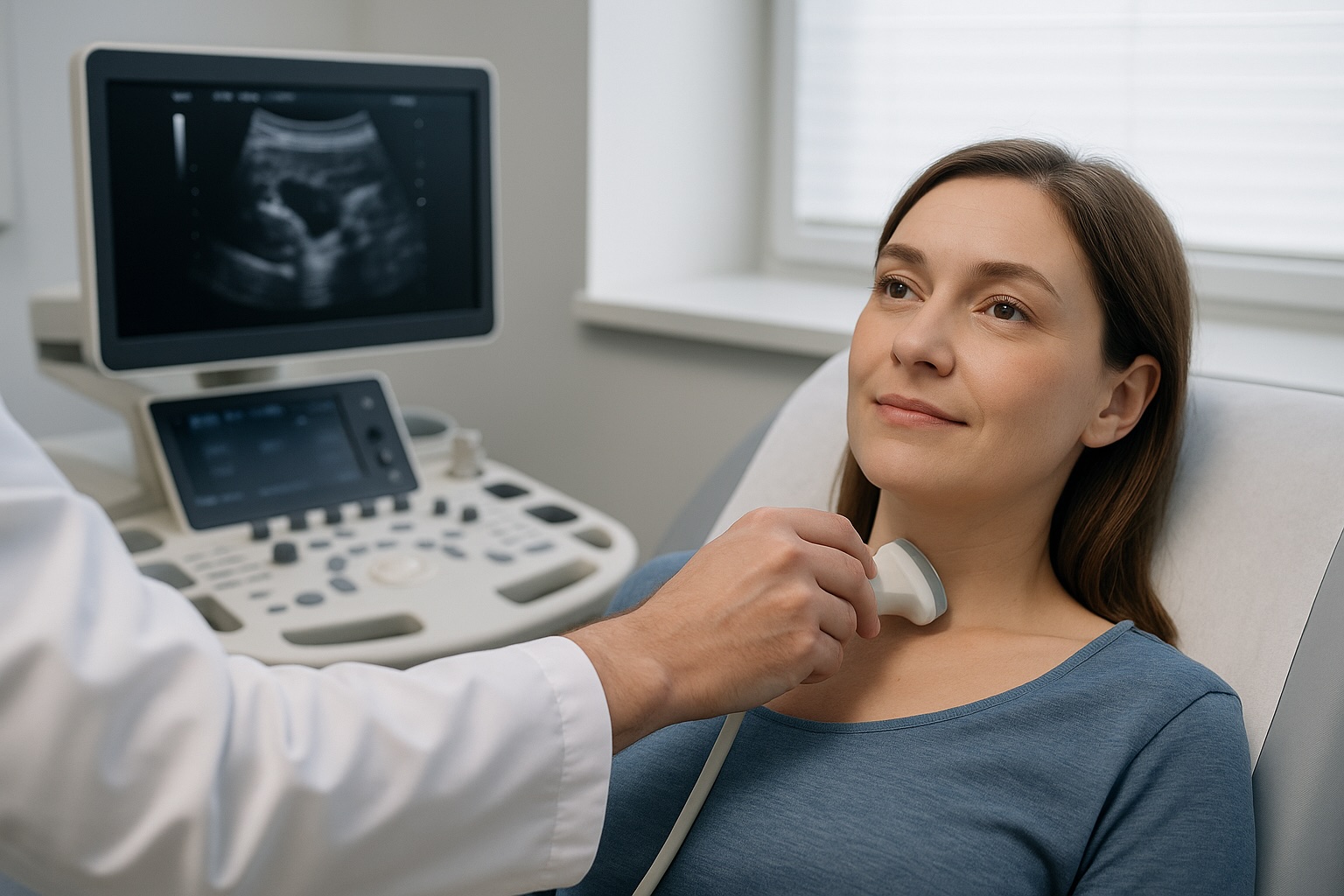

What Thyroid RFA Is and Why You Might Be Hearing More About It
Thyroid radiofrequency ablation, usually called thyroid RFA, treats selected thyroid nodules by placing a thin probe into the nodule and using controlled heat to reduce it from the inside. The goal is simple: shrink the abnormal tissue while leaving as much healthy thyroid tissue alone as possible.
That matters because many thyroid nodules are benign but still bothersome. A nodule does not have to be cancerous to affect your daily life. It can press on your throat, create a visible bulge, or make you constantly aware of your neck.
You may also be hearing more about RFA because patient demand has shifted toward less invasive care. Across North America, minimally invasive procedures continue to grow as more people look for options with less downtime, less pain, and less scarring than surgery.
What “radiofrequency Ablation” Means in Plain Language
The name sounds more intimidating than the treatment itself. “Radiofrequency” refers to energy, and that energy creates heat. “Ablation” means treating or destroying targeted tissue.
In plain language, a very small probe goes into the thyroid nodule, and the heat shrinks the nodule over time. Ultrasound guides the entire procedure so the treatment stays focused on the nodule and avoids nearby healthy structures. It is a bit like shrinking a grape from the inside rather than cutting out the whole bunch.
Why This Matters If You Live Near Newport Beach, Turtle Rock, or Lake Forest
Convenience matters more than most people expect. When you need thyroid imaging, lab review, specialist visits, and follow-up, long drives add stress fast.
If you live in Newport Beach, Turtle Rock, Lake Forest, or nearby Orange County neighborhoods, you do not always have to look far for specialized thyroid care. Coastline Endocrinology offers patient-focused endocrine evaluation with clear explanations and personalized planning, which can make the process feel a lot less overwhelming. If you are comparing nearby locations, it also helps to see how patients approach care in surrounding communities such as what to ask when looking for care near Turtle Rock.
When Thyroid RFA May Be an Option for You
Thyroid RFA is usually considered for benign thyroid nodules that cause symptoms, keep growing, or create cosmetic concerns. The key word is benign. Before this treatment is even considered, the nodule usually needs careful evaluation with imaging and biopsy history.
For the right situation, RFA can be a very appealing middle ground. You get active treatment without going straight to an operation.
Common Signs That a Thyroid Nodule May Need Attention
Some nodules are found by accident on imaging. Others make themselves known. You might feel a lump in your neck, notice pressure when you swallow, or feel a constant fullness in the throat. Sometimes the problem is more visual than physical, especially if the nodule creates visible swelling on one side of the neck.
Voice changes can matter too, though a changing voice should always be taken seriously and evaluated carefully. Even when a nodule turns out to be benign, it still deserves attention if it is affecting comfort, appearance, or peace of mind.
Who Is Often a Good Candidate
A good candidate often has a benign nodule confirmed through workup, symptoms that are annoying or disruptive, or a nodule that has enlarged over time. RFA may also appeal to you if you want to avoid surgery, want a quicker recovery, or are not the best surgical candidate because of other health issues.
Guidance cited in thyroid RFA literature supports its use as a step-up option for selected benign nodules, especially when compressive symptoms or cosmetic concerns are present and surgery is less desirable. Some data also suggest the best-established candidates are Bethesda II benign nodules, which is one reason biopsy review matters so much.
When Another Treatment May Be Better
RFA is not a fix for every thyroid problem. Surgery may be the better choice if a nodule is cancerous, highly suspicious, very large, or causing issues that need a different approach. Medication may make more sense for certain hormone problems. Radioactive iodine can be appropriate in selected overactive thyroid conditions. And sometimes simple monitoring is still the smartest plan.
That is why a thyroid consult should never feel rushed. If you are sorting through nearby options, it can help to compare how care is evaluated in Irvine, especially if you want a clearer sense of how candidacy is determined.

How Your Evaluation Usually Works Before Treatment
Safe thyroid RFA starts long before the procedure day. The real work begins with making sure the nodule is the right type, in the right location, and causing the kind of problem that RFA is actually good at treating.
Careful selection is not a delay. It is the treatment plan.
Thyroid Ultrasound, Lab Work, and Biopsy Review
Your evaluation usually includes a detailed thyroid ultrasound, blood tests that check thyroid function, and a review of prior biopsy results if you have already had a fine needle aspiration. Ultrasound helps define the nodule’s size, makeup, and exact position. Lab work shows whether your thyroid is functioning normally. Biopsy results help confirm that the nodule is benign.
Imaging is central to this process because ultrasound guidance helps with planning, treatment precision, and follow-up. At Coastline Endocrinology, this kind of careful review helps match you with the treatment that makes sense, not just the treatment you happened to ask about first.
Questions to Ask During Your Consultation
Your consultation should leave you with real answers, not vague reassurance. Ask whether the nodule is clearly benign, how much shrinkage is realistic, whether symptoms are likely to improve, what alternatives make sense in your case, and how follow-up will work.
You should also ask what happens if the nodule does not shrink enough after treatment. A good visit gives you a plan, a backup plan, and a clear reason behind both.
What Happens During a Thyroid RFA Procedure
The procedure itself is usually much more straightforward than people expect. Thyroid RFA is commonly done as an outpatient treatment using ultrasound guidance and local anesthesia, so the visit is typically far less involved than surgery in an operating room.
Before the Procedure
Before treatment, you usually receive instructions about eating, medications, and arrival time. You may be told to adjust certain blood thinners or other medications, depending on your history. Bringing prior imaging, biopsy reports, a current medication list, and any recent thyroid lab results can make the visit smoother.
Transportation instructions vary, but it is smart to plan ahead so the day feels easy rather than rushed. If you are comparing prep expectations in nearby areas, you may also want to review what patients can expect near Monarch Beach.
During the Procedure
Your neck is cleaned and numbed with local anesthetic. Then ultrasound is used throughout the procedure to guide a thin probe into the targeted nodule. Once the probe is positioned, controlled heat is applied to shrink the tissue section by section.
The point is precision. The treatment focuses on the nodule while protecting nearby structures as much as possible. You are not having part of your neck opened surgically, which is a big reason many patients find this option less intimidating once it is explained clearly.
Right After Treatment
Afterward, you are usually observed for a short period and then sent home the same day in many cases. Recovery instructions are generally simple and may include watching for swelling, using cold packs if advised, and taking it easy for a short time.
You should leave knowing what is normal, what is not, and when your follow-up will happen.

Benefits of Thyroid RFA Compared With Surgery
The biggest reason people ask about RFA is simple: it may treat the nodule without the bigger disruption of surgery. For selected benign nodules, that can be a meaningful difference.
RFA is not “better” than surgery in every case. It is better for the right case.
Potential Advantages You May Care About Most
Most patients care about a few very practical things. How painful will this be? How long will recovery take? Will there be a scar? Will normal thyroid tissue be preserved?
This is where RFA stands out. It is commonly performed as an outpatient procedure, often with local anesthesia, and it usually involves less interruption to daily life than surgery. Because the nodule is treated rather than the thyroid being partly or fully removed, there may also be a lower chance of needing thyroid hormone replacement afterward compared with surgical removal of thyroid tissue.
A Realistic Note About Results
RFA works gradually, not instantly. The treated nodule typically shrinks over weeks to months rather than disappearing overnight. Success is often measured by symptom relief and by how much the nodule’s volume decreases on follow-up ultrasound.
Published thyroid RFA research describes meaningful improvement in volume reduction rate for benign nodules, which is the medical way of saying the nodule gets smaller in a measurable way. That is what you want if the lump feels intrusive, uncomfortable, or visibly noticeable.
Risks, Side Effects, and Safety Questions
Every procedure has risks, and you deserve a direct explanation of them. Thyroid RFA is generally considered safe when performed by experienced specialists using imaging guidance, but “minimally invasive” does not mean “risk-free.”
Common Temporary Side Effects
Most short-term side effects are mild and temporary. You may have soreness, swelling, bruising, tenderness, or a warm sensation in the treated area. These symptoms usually settle down fairly quickly.
Honestly, this is often the part people worry about most before treatment, and it is usually more manageable than expected once you know what normal recovery feels like.
Rare but Important Complications
Rare complications can include voice change, irritation or injury involving nearby nerves, low calcium issues, or scar formation. These problems are uncommon, but they matter because the thyroid sits near delicate structures in the neck.
The good news is that serious complications are very rare in experienced hands, and continuous ultrasound guidance helps reduce risk by keeping the treatment precise.
Recovery, Follow-Up, and What Results May Feel Like
Recovery is usually fairly quick, but results unfold over time. That can feel strange at first because the treatment is done in a day, yet the improvement keeps developing afterward.
What Recovery Is Usually Like
Many people return to light activity quickly. Your neck may feel sore or tender for a short time, and some fullness or swelling can happen early on. That does not necessarily mean the treatment did not work. The shrinking process takes time.
The main thing to expect is gradual change. Pressure can ease. Swallowing can feel more comfortable. The visible bulge may become less noticeable month by month rather than day by day.
How Follow-up Visits Help
Follow-up is where you see the real progress. Repeat ultrasound can measure how much the nodule has shrunk, and lab review can show whether thyroid function remains stable. Your symptoms matter just as much as the images. If you feel less pressure, less throat awareness, and less concern about the appearance of your neck, that counts.
At Coastline Endocrinology, follow-up should feel just as thoughtful as the first visit. Results should be explained clearly, your questions should be answered in plain language, and your plan should adjust based on how your thyroid responds. If you are looking across Orange County, it may also help to compare patient guidance for Costa Mesa area care.
Common Questions About Thyroid RFA in Newport Beach
Is Thyroid RFA Painful?
Most people describe thyroid RFA as manageable rather than painful in the way surgery is often imagined. Numbing medicine helps a lot, and ultrasound guidance keeps the treatment targeted. You may feel pressure, heat, or temporary discomfort, but the procedure is generally designed around precision and comfort.
Will You Still Need Thyroid Medication Afterward?
Many patients do not need thyroid medication after RFA, especially when healthy thyroid tissue is preserved and thyroid function was normal before treatment. Still, this depends on your baseline labs, your thyroid history, and how much treatment is needed. The answer should come from your own evaluation, not from a blanket promise.
Can RFA Treat Thyroid Cancer?
RFA is most established for selected benign thyroid nodules. Some cancer-related uses are being studied or used in limited, case-specific situations, but that does not make it the standard choice for most thyroid cancers. If cancer is suspected or confirmed, surgery often remains the more appropriate path.
How Long Does It Take to See Improvement?
Improvement usually happens gradually over weeks to months. The nodule shrinks over time, and symptom relief often follows that same timeline. Follow-up ultrasound helps track progress instead of guessing.
Finding Specialized Thyroid Care Near Newport Beach and Lake Forest
If you live near Newport Beach, Turtle Rock, or Lake Forest, specialized thyroid care can be much more local and accessible than you might think. That matters when your care involves imaging, consultations, possible procedures, and follow-up visits that should feel calm and coordinated.
Coastline Endocrinology is built around that kind of care. Your symptoms, labs, imaging, and treatment options should all be reviewed in a way that makes sense to you, without making you feel rushed through the process.
What to Look for in a Thyroid RFA Provider
Look for thyroid-focused experience, strong ultrasound-guided procedure skills, careful biopsy and imaging review, and clear communication. Convenience matters, but expertise and follow-up matter more.
You want a provider who can explain why RFA fits, why it does not, or why another option is smarter. If you are comparing local choices beyond Newport Beach, you may also find it useful to read about choosing care near Laguna Niguel.
How to Reach Us From Newport Beach
Lake Forest, CA 92630

Getting Ready to Book Your Visit
Before your appointment, gather prior ultrasound reports, biopsy results, lab work, and a current medication list. If you have photos or notes about changes in the size of the lump or your symptoms, bring those too. Small details can be surprisingly helpful.
A first consultation should make the path forward clearer. Coastline Endocrinology offers the kind of attentive endocrine evaluation that helps you understand your options, prepare for treatment if RFA is a fit, and consider alternatives if it is not. If a thyroid nodule has been bothering you, this is a good time to book an appointment and get a real plan in place.